






Why Your Shower Pressure Drops Every Time The Sprinklers Run
You step into the shower on a hot August morning in McKinney, the water feels strong for about thirty seconds, and then the spray weakens to a trickle right as the irrigation system kicks on outside. This is one of the most common summer complaints plumbers hear across North Texas, and it almost always traces back to a simple problem of supply versus demand inside your water system. Your home only receives a fixed volume of water through a single service line, and every sprinkler head pulling from that line takes water away from the fixtures inside the house. Some homes handle the competition without much trouble, while others lose so much pressure that the shower becomes unusable until the irrigation cycle finishes. The difference usually comes down to pipe sizing, meter capacity, the condition of your supply piping, and the setting on your pressure reducing valve. Understanding what is actually happening behind the walls helps you figure out which fix makes sense for your home and your budget. In many cases, the sprinklers are simply exposing a plumbing weakness that was already there and would have shown up eventually in some other way.
How Sprinkler Systems Cause Low Shower Pressure In Your Home
Pressure and flow are two different measurements, and confusing them is the reason so many homeowners misdiagnose this problem. Pressure is the force pushing water through your pipes, measured in pounds per square inch, while flow is the actual volume of water moving through them, measured in gallons per minute. When your sprinkler zones open, they create an enormous demand for flow, and the friction created by that fast moving water inside your supply piping causes a measurable drop in the pressure available everywhere else. A single irrigation zone with six spray heads can easily pull ten to fifteen gallons per minute, while your shower head is only designed to deliver somewhere between 1.8 and 2.5 gallons per minute. That imbalance means the sprinklers are consuming five to eight times more water than your shower needs, all through the same pipe. Once you understand that relationship, the timing of your low pressure problem stops being a mystery and starts being a math problem with a solution.
The Real Reason Sprinkler Demand Lowers Shower Pressure
Nearly every residential irrigation system in Collin County taps into the home’s water supply somewhere between the city meter and the house, which means the sprinklers and the shower are drinking from the same straw. Water entering your property passes through the meter, travels down a single service line, and only then splits toward the irrigation manifold and the interior plumbing. When the irrigation controller opens a zone valve, that zone begins pulling water at a rate the service line was never designed to deliver alongside normal household use. Friction loss increases dramatically as flow increases, meaning the faster water moves through a pipe, the more pressure it loses along the way. A three quarter inch service line carrying four gallons per minute might lose only a few pounds of pressure across its length, but that same line carrying sixteen gallons per minute can lose twenty pounds or more. The shower feels the difference immediately because it sits at the end of a long branch line with additional fittings, elbows, and a mixing valve all adding their own resistance. Multiply that effect across a two story home where the shower sits above the supply point, and the pressure loss becomes impossible to ignore.
The problem gets worse when more than one zone runs at the same time, which happens on older controllers that were programmed poorly or on systems where a master valve is leaking through. Some homeowners also schedule their irrigation for early morning hours specifically because water evaporates less in the cool part of the day, which is good agronomic practice but places the sprinkler cycle squarely in the middle of the family morning routine. Adding a second bathroom, a dishwasher, or a washing machine to the same window compounds the demand until the entire system runs short. Your water heater also plays a role here because it needs incoming cold water pressure to push hot water out toward the fixture. If the cold supply weakens, the hot side weakens right along with it, and the shower loses volume from both directions at once. This is why a low pressure complaint during irrigation cycles often comes with temperature swings that make the shower uncomfortable as well as weak. The fixture is not broken; it is simply being starved of the supply it was engineered to receive.
Modern shower valves make this feel even more dramatic than it did in older homes with separate hot and cold handles. Nearly all shower valves installed in the last thirty years include a pressure balancing spool designed to prevent scalding, and that spool works by throttling the hot side down whenever the cold side loses pressure. The safety feature does exactly what it should, but the visible result is a shower that drops to a fraction of its normal output the instant the sprinklers start. Homeowners frequently replace the shower head, clean the aerator, or install a high flow trim kit and see no improvement at all, because the restriction is not at the fixture. Some go so far as to remove the flow restrictor from the shower head, which is a code violation and still does nothing to solve an upstream supply problem. The only fixes that work are the ones that either reduce demand during the shower window or increase the volume your system can deliver. A plumber who tests static and working pressure at the hose bib with the zones open and closed can prove exactly where the loss is occurring within a few minutes.

How Pipe Size And Meter Capacity Create Low Shower Pressure
The single largest factor in how much pressure you lose during a sprinkler cycle is the diameter of the pipe feeding your house. Many homes built in North Texas before the 2000s were plumbed with a three quarter inch service line running from the meter to the house, which was perfectly adequate for the fixture count at the time. Those same homes now have larger irrigation systems, second water heaters, multiple bathrooms, refrigerator water lines, and outdoor kitchens all sharing that original line. Water volume moving through a pipe increases with the square of its interior diameter, so upgrading from three quarter inch to one inch delivers far more additional capacity than the small size change suggests. A one inch service line can carry roughly twice the flow of a three quarter inch line at the same pressure loss, which is often enough to make the sprinkler interference disappear entirely. The length of the run matters too, since a home set far back from the street loses more pressure across the distance than one sitting close to the meter. Homes on large lots in Fairview, Lucas, and Parker feel this more sharply than homes on smaller Frisco or Plano lots for exactly that reason.
Your water meter creates a second potential bottleneck that homeowners rarely consider. Most residential properties in this area are served by a five eighths inch or a five eighths by three quarter inch meter, which is sized for typical indoor consumption rather than heavy simultaneous irrigation. Every meter has a published maximum flow rate, and pushing water through it near that maximum generates significant pressure loss inside the meter body itself. If your household demand plus your irrigation demand regularly exceeds what the meter can pass comfortably, no amount of interior plumbing work will fully solve the problem. Upgrading meter size requires coordination with the city and usually carries a higher monthly base rate, so it makes sense only after a plumber verifies the meter is genuinely the restriction. In many cases the meter is fine and the service line is the actual culprit, which is why proper testing before spending money matters so much. A pressure gauge reading taken at the meter and again at the house tells the story quickly.
The pressure reducing valve deserves close attention as well, because it sits at the entry point of your home and controls everything downstream of it. North Texas municipal systems often deliver water at pressures well above eighty pounds per square inch, and plumbing code requires a pressure reducing valve when static pressure exceeds that threshold. These valves contain a diaphragm and a spring that wear out over time, and a tired valve loses its ability to maintain outlet pressure when flow demand rises sharply. The result is a home that shows perfectly normal pressure with all fixtures closed but collapses to thirty pounds or less the moment the sprinklers open. Most pressure reducing valves last somewhere between ten and fifteen years in this region, and hard water shortens that lifespan further by leaving mineral deposits on the internal components. Replacing a failing valve is one of the least expensive fixes available and frequently restores shower performance completely. If your home is more than a decade old and has never had this valve serviced, it belongs at the top of the inspection list.
Why Older Homes Suffer The Worst Low Shower Pressure Problems
Galvanized steel piping is the classic offender in homes built before the early 1970s, and plenty of those houses still stand in McKinney, Princeton, Dallas, and the older sections of Richardson. Galvanized pipe corrodes from the inside out, building up layers of rust and mineral scale that gradually shrink the interior diameter until a three quarter inch pipe passes water like a half inch pipe. That process happens slowly enough that families adapt to declining pressure without noticing, right up until an irrigation system adds demand the pipe can no longer support. Cutting open a section of fifty year old galvanized pipe often reveals an opening no wider than a pencil, choked with rust that flakes loose and clogs aerators and cartridges downstream. No amount of flushing or chemical treatment reverses this damage, and partial replacement rarely helps because the remaining sections continue to degrade. Full repiping is the permanent answer, and it typically restores pressure to levels the homeowner has not experienced in decades. Our repiping service handles these projects with modern materials that will not corrode or scale the same way.
Older homes also tend to have accumulated modifications that quietly restrict flow. Previous owners add bathrooms, extend lines to detached structures, tie in irrigation systems, and install water treatment equipment, and each addition places more demand on piping that was never resized to match. Undersized branch lines running to upstairs bathrooms are extremely common, particularly in homes where a bathroom was added during a remodel and the plumber tapped the nearest available line rather than running a properly sized supply. Old gate valves present another hidden problem, since their internal gates corrode and drop partially into the flow path where they act as permanent restrictions. Homeowners sometimes find a main shutoff valve that was never reopened completely after a repair years earlier, silently strangling the entire house. Water softeners and whole house filters add resistance as well, and a neglected filter cartridge can cut available flow substantially. A thorough inspection catches these issues in a single visit rather than through years of guesswork.
Slab leaks add a different dimension to the problem in this part of Texas, where expansive clay soil shifts constantly with our wet and dry cycles. That soil movement stresses the copper lines running beneath your foundation until a pinhole develops, and the leak bleeds pressure continuously without ever showing up as visible water inside the home. During normal use the loss might be small enough to escape notice, but adding sprinkler demand on top of a leak pushes the system past its limits. Warm spots on the floor, the sound of running water with all fixtures closed, unexplained increases on the water bill, and foundation movement all point toward this possibility. Ignoring a slab leak allows it to erode the soil supporting your foundation, which turns a plumbing repair into a structural repair. Catching it early keeps the cost manageable and protects the house. If any of these signs sound familiar, our leak detection service locates the problem without tearing up your home to find it.
How To Fix Low Shower Pressure Caused By Your Sprinkler System
Solving this problem starts with an honest assessment of what your water system can actually deliver, followed by a decision about reducing demand or increasing capacity. Some homeowners get complete relief from a controller adjustment that costs nothing, while others need real plumbing work to bring their supply up to modern standards. The right path depends on the age of your home, the size of your service line, the condition of your pressure reducing valve, and how heavily you use water during peak hours. A plumber can measure your working pressure under load and tell you within one visit which category your home falls into. Guessing wastes money on fixture upgrades and water pressure boosters that address symptoms rather than causes. The good news is that most homes in this area respond well to one or two targeted corrections rather than a complete overhaul.
Simple Scheduling Changes That Improve Low Shower Pressure
The cheapest fix available is moving your irrigation schedule away from the hours your family uses water inside the house. Most controllers allow multiple start times, and shifting the cycle to begin around two or three in the morning keeps the sprinklers well clear of the morning shower routine while still watering during the cool part of the night. Watering that early also reduces evaporation loss and gives grass blades time to dry before the sun creates conditions that encourage fungus. Check that your controller is not running a duplicate program left over from a previous season, since two overlapping programs will open multiple zones at once and double the demand. Battery backed controllers sometimes lose their settings after a power outage and revert to a factory schedule that nobody intended. Reviewing the full program at the start of each irrigation season takes ten minutes and prevents months of frustration.
Reducing the number of heads operating at one time also lowers peak demand substantially. Many irrigation systems in North Texas were designed with zones that are simply too large, packing ten or twelve spray heads onto a single valve because it saved money during installation. Splitting an oversized zone into two smaller zones cuts the instantaneous flow requirement roughly in half and improves sprinkler performance at the same time, since heads operating below their design pressure produce poor distribution patterns and leave dry spots in the lawn. Converting spray heads to rotary nozzles reduces flow per head considerably while extending run times to deliver the same total water. That change alone can drop a zone from fourteen gallons per minute to six or seven, which often eliminates the interference completely. An irrigation technician can make these adjustments without touching your interior plumbing.
Watch for irrigation problems that create constant demand outside of any programmed schedule. A zone valve with a torn diaphragm or debris trapped under the seat will weep water continuously, pulling flow from your system twenty four hours a day. Broken heads, cracked lateral lines, and a leaking backflow preventer all do the same thing on a larger scale. Texas requires a backflow prevention assembly on every irrigation system connected to a potable water supply, and those assemblies need periodic testing to confirm the check valves are sealing properly. Soggy spots in the yard, unusually green patches, and a water bill that climbed without explanation are the signs worth investigating. Fixing a persistent irrigation leak restores pressure inside the house and stops paying for water that never reaches your lawn.
Plumbing Repairs That Restore Shower Pressure During Irrigation Cycles
When scheduling changes are not enough, the next step usually involves the pressure reducing valve at your main entry point. A plumber removes the old valve, installs a new one sized correctly for your home, and adjusts the outlet pressure to a target somewhere between fifty five and seventy pounds per square inch depending on the number of fixtures and the height of the home. Setting the pressure too high stresses supply lines, water heater tanks, washing machine hoses, and toilet fill valves, which is exactly the opposite of what most homeowners want. Setting it correctly gives you strong fixture performance while protecting the rest of the system from premature failure. The job typically takes a couple of hours and represents one of the highest value repairs available for a pressure complaint. Pairing the valve replacement with a new main shutoff and a thermal expansion tank brings the whole entry assembly up to current code at the same time.
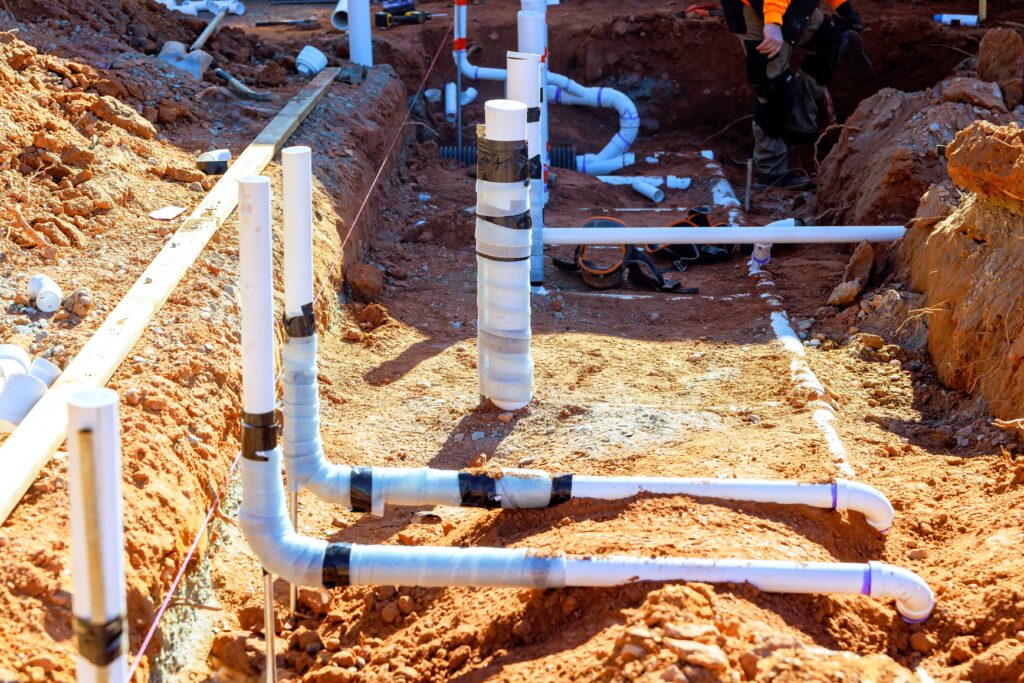
Upgrading the service line delivers the largest and most permanent improvement for homes with genuine capacity limits. Replacing a three quarter inch line with a one inch line increases available flow dramatically and gives your home headroom for future additions like a second water heater or an outdoor kitchen. Modern service lines use materials engineered for direct burial that resist the corrosion and mineral buildup that plagued older copper and galvanized installations. Directional boring allows the new line to go in with minimal damage to landscaping, driveways, and irrigation piping, which keeps restoration costs down. Most replacements finish within one day, and the improvement is obvious the first time you run the shower with the sprinklers on. Our main water line installation service covers sizing, permitting, and inspection so the work is done correctly the first time.
Interior repiping makes sense when the branch lines inside your walls are the restriction rather than the line coming in from the street. This applies most often to galvanized systems and to homes where undersized half inch lines feed fixture groups that should have been served by three quarter inch supplies. A repipe reroutes the distribution system with properly sized trunk lines and dedicated branches, which balances pressure across the entire house rather than favoring whichever fixture happens to sit closest to the water heater. Homeowners frequently report that the change affects far more than the shower, improving performance at kitchen sinks, laundry connections, and outdoor spigots as well. The work requires access through drywall in specific locations, and a competent crew keeps those openings small and documented for the drywall repair that follows. Pairing a repipe with a water heater evaluation makes sense, since the two systems work together to deliver hot water at the fixture.
Warning Signs That Low Shower Pressure Means A Larger Plumbing Problem
Not every pressure complaint traces back to the sprinklers, and some of them point toward conditions that get expensive if they go unaddressed. Pressure that drops steadily over months, rather than only during irrigation cycles, suggests corrosion or scale narrowing your pipes throughout the house. Water that runs rusty or discolored when a fixture first opens indicates the interior surfaces of your piping are breaking down and shedding material into the supply. Fluctuating pressure that comes and goes without any clear pattern often points toward a failing pressure reducing valve or a partially obstructed line. Sudden pressure loss with no change to your irrigation schedule deserves immediate attention because it can signal a break somewhere in the service line or under the slab. Paying attention to how the symptom behaves over time gives a plumber valuable diagnostic information before any tools come out.
Hot water pressure that drops noticeably more than cold water pressure points toward sediment accumulation inside your water heater tank. North Texas water carries substantial mineral content, and calcium and magnesium settle to the bottom of the tank where they form a hardened layer that reduces capacity and restricts the outlet. That same sediment shortens the life of the tank, forces the burner or elements to work harder, and drives up energy costs month after month. Annual flushing removes the loose material before it hardens, which is why maintenance matters more here than in regions with softer water. A tank that has never been flushed after eight or ten years of service may hold several inches of hardened deposits. Descaling or replacement restores hot water performance and typically pays for itself through lower operating costs.
Sounds coming from your plumbing carry useful diagnostic information too. Banging or hammering when a valve closes indicates the system lacks proper arrestors or that pressure is running too high, both of which stress joints and appliances. A continuous hissing behind a wall or under the floor with everything shut off strongly suggests an active leak that is draining pressure from the system. Vibration or whistling at a specific fixture often means a partially closed stop valve or a damaged cartridge restricting flow at that point only. Documenting when and where you hear these sounds helps a plumber narrow the search quickly. Small clues like these frequently lead to the discovery of problems that would otherwise cause serious water damage.
Why You Need A Licensed Plumber To Solve Low Shower Pressure
Pressure problems look simple from the outside and turn complicated as soon as you start measuring. The same symptom can come from a worn valve, an undersized line, a corroded pipe, a hidden leak, or a meter that has reached its limit, and telling those causes apart requires proper testing equipment and experience reading the results. Homeowners who guess often spend money on fixtures, filters, and boosters that never address the actual restriction. A licensed plumber tests static pressure, working pressure under load, and flow rate at multiple points to build an accurate picture before recommending anything. That approach costs less over time because the first repair is the right one. Pounce Plumbing brings that diagnostic discipline to every service call across Collin County and the surrounding communities.
What A Professional Low Shower Pressure Diagnosis Includes
Our technicians begin with a pressure gauge at an exterior hose bib to establish your static pressure with all fixtures closed. We then open the irrigation zones and take readings again to measure exactly how much pressure the system loses under real conditions. Those two numbers, compared against the expected performance for your pipe size and meter, immediately tell us if the problem lies with capacity or with a component failure. We inspect the pressure reducing valve, the main shutoff, and any water treatment equipment for signs of wear or restriction. Fixture level testing at the shower confirms if the valve cartridge or the supply stops are contributing to the loss.
From there we examine the visible plumbing for material type, pipe size, and evidence of corrosion or previous repairs. Homes with galvanized supply lines get a different recommendation than homes with copper or modern flexible piping, and knowing what you have is the starting point for any accurate estimate. We check the water heater connections, the expansion tank, and the age and condition of the tank itself. If the readings suggest a hidden leak, we bring in electronic detection equipment rather than opening walls or breaking concrete on a guess.
You receive a clear explanation of what we found, what caused it, and what your options are at different price points. Some homeowners choose the least expensive fix that solves the immediate complaint, while others prefer to address the underlying capacity issue permanently. We lay out both paths honestly and let you decide without pressure. Every recommendation comes with a written estimate before any work begins. If you want to understand what your supply line condition means for the rest of the house, our main water line repair service page explains the process in detail.

The Real Cost Of Ignoring A Low Shower Pressure Problem
Low pressure by itself is an annoyance, but the conditions causing it rarely stay contained. A pressure reducing valve that has begun to fail will eventually stop regulating altogether, exposing your entire plumbing system to full municipal pressure that can burst supply lines and flood a home in minutes. Corroded galvanized pipe continues to close down until fixtures stop working entirely, and the rust shedding into your water damages faucet cartridges, appliance valves, and water heater components along the way. A slab leak left alone erodes the soil beneath your foundation and can lead to structural movement that costs far more to correct than the plumbing repair would have.
Water bills tell the story before the damage becomes visible. A leaking irrigation valve or a pinhole in a supply line adds gallons every single hour, and those charges accumulate quietly across billing cycles until someone finally investigates. Municipalities across the Dallas area have raised water rates steadily, which means a leak that seemed tolerable a few years ago costs meaningfully more today. Homeowners often discover they paid several times the cost of the repair in wasted water before addressing the source.
There is also the matter of the equipment your pressure problems are quietly damaging. Water heaters, dishwashers, washing machines, and ice makers all depend on stable supply pressure to operate as designed. Pressure that swings wildly with each irrigation cycle stresses the fill valves and solenoids inside those appliances and shortens their service life. Fixing the supply issue protects thousands of dollars in equipment throughout the home. Addressing the problem early is almost always the less expensive decision.
Why Choose Pounce Plumbing For Your Low Shower Pressure Repair
Pounce Plumbing is fully licensed and fully insured, and every technician who enters your home works under that license with the training to back it up. We charge by the job rather than by the hour, so you know the price before we start and the number does not change if the work takes longer than expected. That structure removes the incentive to stretch a job and puts the focus where it belongs, on solving the problem correctly. Our work is backed by five star reviews from homeowners across McKinney, Princeton, Allen, Frisco, Plano, and the surrounding communities.
The Pounce Pass carries our Lifetime Craftsmanship Guarantee, which means the workmanship on your repair is covered for as long as you own the home. We stand behind what we install because we use quality materials and we do not cut corners to win a bid. Our technicians arrive in stocked trucks, explain what they find in plain language, and clean up completely before they leave. You get straight answers, fair pricing, and work that holds up.
We have served North Texas homeowners through drought summers, freeze events, and everything in between, and we understand how local soil conditions and water chemistry affect the plumbing in these neighborhoods. That regional knowledge shapes every recommendation we make, from material selection to maintenance intervals. If your shower pressure drops every time the sprinklers run, we can measure the cause and give you a real solution instead of a guess. Call Pounce Plumbing at (469) 772-5766 or email info@pounceplumbing.com to schedule your water pressure evaluation, and let us get your water working the way it should.
